respirateur à pression positive Les appareils de protection respiratoire à ventilation assistée (PAPR) constituent un équipement de protection essentiel dans les environnements de travail à haut risque. Grâce à leur technologie d'alimentation en air sous pression positive active, ils garantissent la sécurité respiratoire et réduisent considérablement la fatigue au travail. Ils sont largement utilisés dans les industries chimiques, nucléaires, métallurgiques, minières et autres. Le mode d'entrée d'air, élément fondamental de la conception des PAPR, influe directement sur la stabilité du flux d'air, la fiabilité de la protection, le confort de port et l'adaptabilité à l'environnement. Les entrées d'air frontales, latérales et dorsales sont les configurations les plus courantes. Chaque mode d'entrée d'air présente des avantages et des inconvénients spécifiques selon les environnements de travail ; un choix judicieux est donc crucial pour optimiser l'efficacité de la protection et le confort d'utilisation.
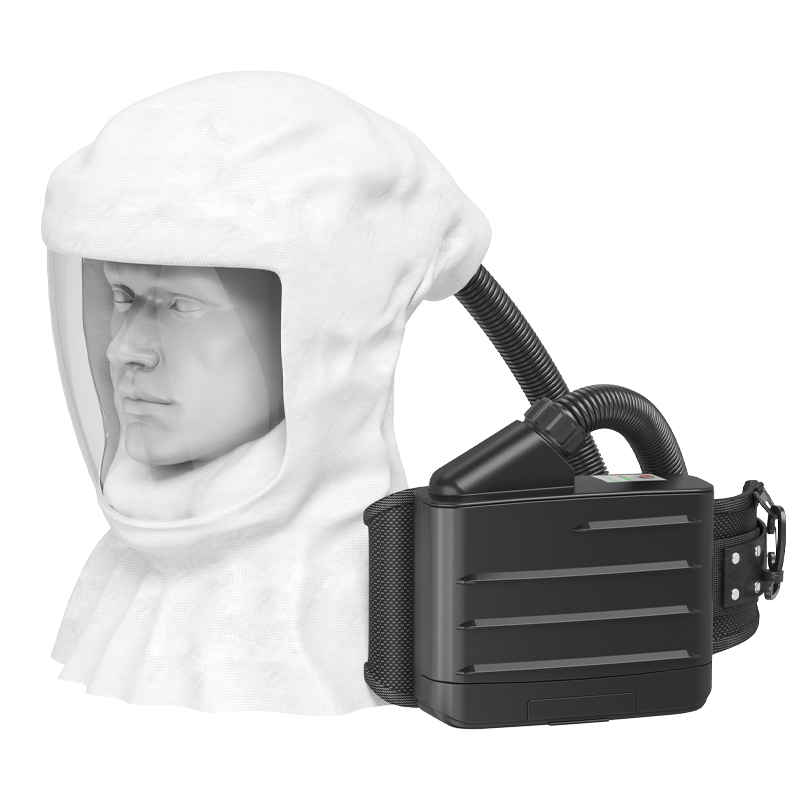
Le mode d'entrée d'air avant est un choix courant pour les modèles de base. respirateur à purification d'air à poudre Grâce à son système d'alimentation en air direct, ce modèle présente l'avantage d'un trajet d'air court et de faibles pertes. Il intègre généralement l'entrée d'air et le filtre à l'avant du masque ou de la cagoule. Après filtration, l'air extérieur est directement acheminé vers la zone respiratoire, établissant et maintenant rapidement une surpression à l'intérieur du masque. Ceci empêche efficacement les polluants de s'infiltrer par les interstices et convient particulièrement aux situations exigeant une protection rapide. Par ailleurs, la conception relativement simple de l'entrée d'air frontale facilite le démontage et le remontage du filtre, réduit les coûts d'entretien quotidiens et permet d'évacuer efficacement la chaleur et l'humidité du visage, soulageant ainsi la sensation d'étouffement dans les environnements chauds. Cependant, ce système présente des inconvénients majeurs : le filtre saillant à l'avant peut obstruer le champ de vision, affectant la perception spatiale lors d'opérations de précision ou dans des conditions de travail complexes ; l'entrée d'air étant directement exposée à l'environnement de travail, elle est vulnérable aux projections et à la poussière, et son efficacité de filtration peut être réduite par les taches d'huile et l'adhérence de poussière. Ce système est donc inadapté au soudage, au meulage et autres activités présentant des risques de projections.
L'entrée d'air latérale est une solution équilibrée alliant praticité et adaptabilité, largement utilisée en milieu industriel. Son principal atout réside dans le positionnement de l'unité d'entrée d'air sur le côté de la cagoule ou du masque, assurant une distribution uniforme du flux d'air grâce à une structure de guidage. Elle évite non seulement d'obstruer le champ de vision frontal, mais réduit également l'impact des chocs externes sur le système d'admission d'air. L'entrée d'air latérale offre un flux d'air plus stable ; en optimisant l'angle de la plaque de guidage, l'air pur couvre toute la zone respiratoire, réduisant ainsi les zones mortes et minimisant l'inconfort lié au flux d'air direct sur le visage. Elle est particulièrement adaptée aux opérations intensives de longue durée. De plus, la répartition du poids de l'unité d'entrée d'air latérale est plus homogène ; associée à un module d'alimentation fixé à la taille, elle permet d'équilibrer la charge sur la tête et d'améliorer le confort de port. Ses inconvénients résident dans sa structure plus complexe que celle de l'entrée d'air frontale, exigeant une grande précision dans la conception de la plaque de guidage ; des angles inappropriés peuvent engendrer des courants de Foucault et augmenter la résistance respiratoire. Une entrée d'air unilatérale peut entraîner une répartition inégale du flux d'air des deux côtés, et la partie latérale saillante peut interférer avec le fonctionnement des équipements et dans les espaces étroits, affectant ainsi la flexibilité opérationnelle.
Le mode d'entrée d'air dorsal privilégie l'adaptabilité aux environnements extrêmes et la liberté d'utilisation, notamment dans les espaces restreints, les environnements fortement pollués ou les applications aux exigences particulières. Son principal avantage réside dans la liberté totale qu'il offre devant et sur les côtés de la tête. L'unité d'entrée d'air est généralement intégrée au module d'alimentation et à la batterie dans un sac à dos ou une ceinture ventrale, alimentant la cagoule en air via un tuyau sans gêner le champ de vision ni les mouvements des membres. Ce mode est particulièrement adapté au soudage, à la maintenance en espaces confinés, à la conduite d'engins lourds et à d'autres applications similaires. L'unité d'entrée d'air dorsale est peu sensible aux interférences extérieures, ce qui la protège efficacement des projections et de la poussière et prolonge la durée de vie du filtre. De plus, le poids étant concentré sur le dos ou la taille, la pression exercée sur la tête est réduite, améliorant considérablement le confort lors d'une utilisation prolongée. Enfin, le long parcours de l'air à l'arrière permet un pré-refroidissement, atténuant la sensation d'étouffement dans les environnements chauds. Cependant, l'entrée d'air arrière présente des limitations évidentes : le long trajet du flux d'air engendre une résistance à l'alimentation légèrement supérieure à celle des entrées d'air avant et latérales, ce qui nécessite une puissance de ventilation plus élevée et consomme davantage d'énergie ; le raccord du tuyau est sujet à la torsion et à la traction lors de grands mouvements des membres, ce qui affecte la stabilité du flux d'air, et des dommages au tuyau et des fuites d'air peuvent survenir dans des cas extrêmes ; la facilité d'entretien est faible, car le module arrière doit être retiré pour remplacer l'élément filtrant, ce qui le rend inadapté aux environnements très poussiéreux nécessitant un remplacement fréquent du filtre.
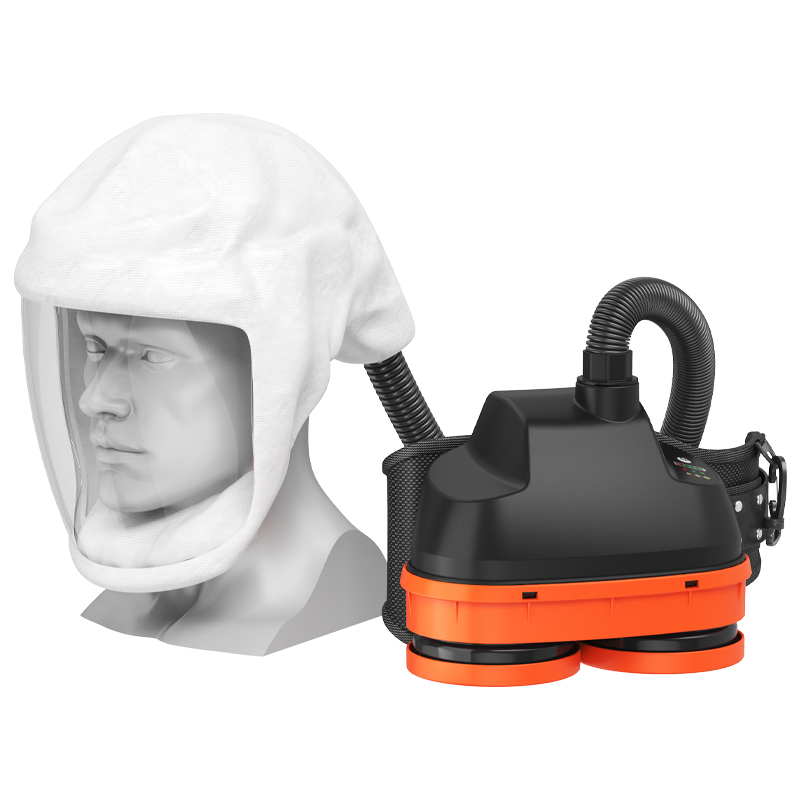
La sélection doit reposer sur une évaluation globale des scénarios de travail, de l'intensité du travail et des risques environnementaux, plutôt que sur la simple recherche d'un avantage unique. Pour les opérations à faible concentration de poussière, de courte durée et nécessitant une visibilité générale, une entrée d'air frontale est recommandée. respirateur à papier Le choix du mode d'entrée d'air permet d'optimiser le rapport coût-protection. Pour des concentrations de poussière moyennes et des opérations de longue durée nécessitant un travail de précision, l'entrée d'air latérale est la solution optimale, offrant un bon compromis entre visibilité, confort et stabilité de la protection. En cas de forte pollution, d'espaces restreints, de risques d'éclaboussures ou d'opérations intensives, l'entrée d'air arrière est recommandée afin de maximiser la liberté de mouvement et la durabilité de l'équipement. Quel que soit le mode d'entrée d'air choisi, il est impératif d'utiliser des unités de filtration conformes à la norme GB30864-2014 et de contrôler régulièrement la pression d'air et l'étanchéité de l'équipement pour garantir une protection par surpression continue et efficace.
Le principe de conception des systèmes d'admission d'air des appareils de protection respiratoire à ventilation assistée (PAPR) repose sur un équilibre optimal entre fiabilité de la protection, confort de port et adaptabilité aux différentes situations. À l'avenir, grâce à une régulation intelligente du flux d'air et à une conception légère, les systèmes d'admission d'air des PAPR dépasseront les limitations actuelles et offriront une protection accrue en environnements extrêmes ainsi qu'un confort d'utilisation prolongé. Pour en savoir plus, cliquez ici. www.newairsafety.com.





 Réseau IPv6 pris en charge