inquiry
laisser un message
Si vous êtes intéressé par nos produits et souhaitez en savoir plus, veuillez laisser un message ici, nous vous répondrons dès que possible.
SOUMETTRE
Bengbu Longkai Welding Protection Technology Co., Ltd.
MAISON

masque respiratoire papr

masque respiratoire papr

  • Demolition Work: Choosing the Right PAPR
    Demolition Work: Choosing the Right PAPR
    Jan 20, 2026
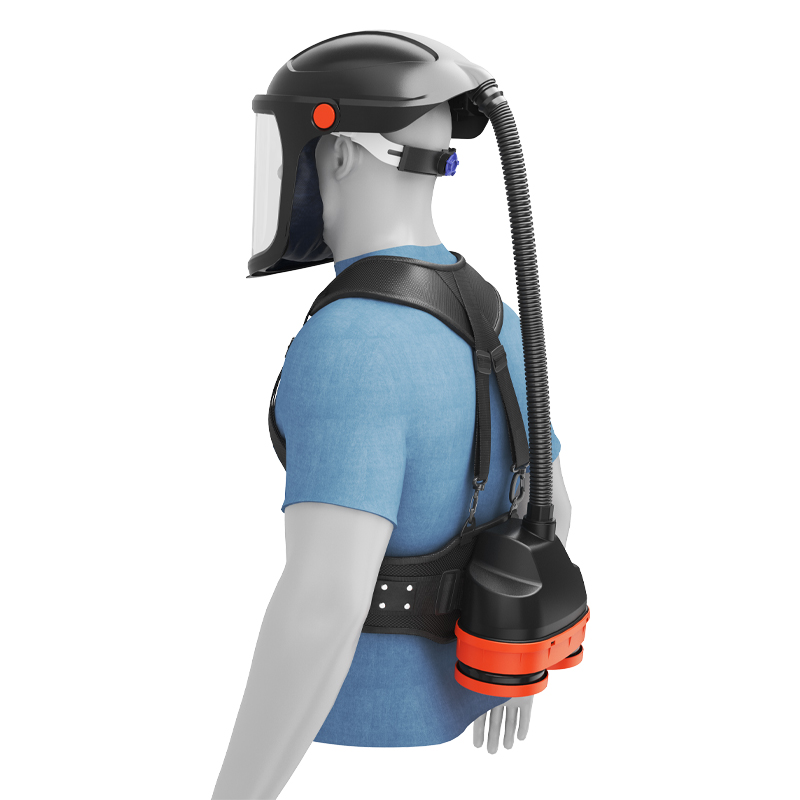
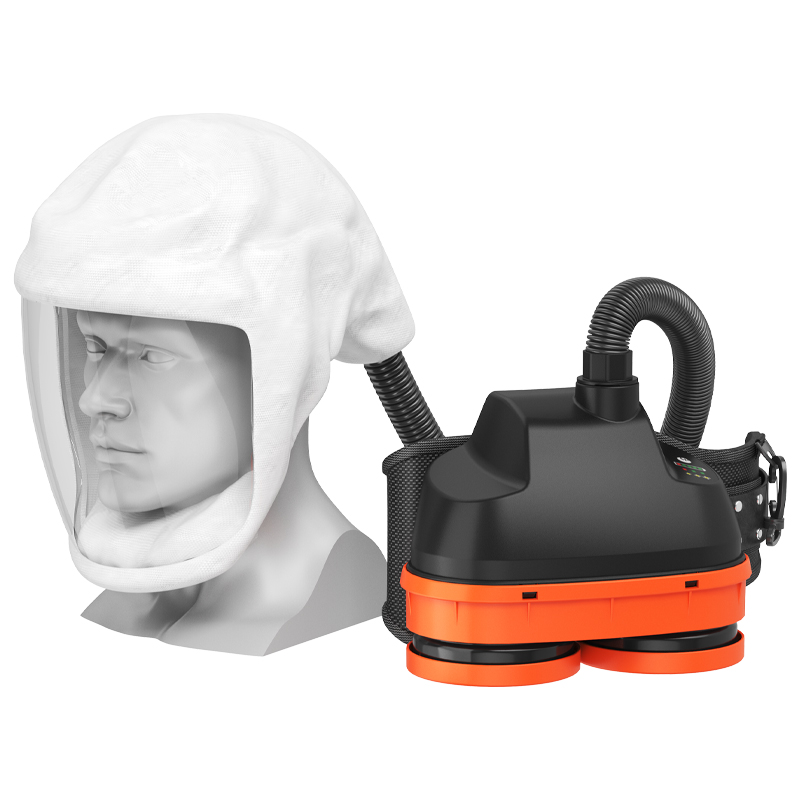
      Demolition work involves complex and variable environments. From breaking down walls of old buildings to dismantling industrial facilities, pollutants such as dust, harmful gases, and volatile organic compounds (VOCs) are pervasive, placing extremely high demands on respiratory protection for workers. battery powered respirator have become core protective equipment in demolition work due to their advantages of positive pressure protection and low breathing load. However, not all PAPRs are suitable for all scenarios; selecting the right type is essential to build a solid line of defense for respiratory safety. Compared with traditional negative-pressure respirators, PAPRs actively deliver air through an electric fan, which not only reduces breathing fatigue during high-intensity operations but also prevents pollutant leakage through the positive pressure environment inside the mask, significantly improving protection reliability.   For general dust-generating demolition operations, particulate-filtering PAPRs are preferred. Such operations commonly involve the demolition of concrete, masonry, wood, and other components, with respirable dust—especially PM2.5 fine particles—as the primary pollutant. Long-term inhalation can easily induce pneumoconiosis. When selecting a model, high-efficiency particulate filters should be used, and the mask can be chosen based on operational flexibility needs. For open-air scenarios such as ordinary wall breaking and floor demolition, air-fed hood-type PAPRs are more suitable. They do not require a facial fit test, offer strong adaptability, and can also provide head impact protection. For narrow workspaces with extremely high dust concentrations, it is recommended to use tight-fitting full-face PAPRs, which have a minimum air flow rate of no less than 95L/min, forming a tight seal on the face to prevent dust from seeping through gaps.   For demolition operations involving harmful gases, combined-filtering PAPRs are required. During the demolition of old buildings, volatile organic compounds such as formaldehyde and benzene are emitted from paints and coatings, while the dismantling of industrial facilities may leave toxic gases such as ammonia and chlorine. In such cases, a single particulate-filtering PAPR cannot meet protection needs. Dual-filter elements (particulate + gas/vapor) should be used, with precise selection based on pollutant types: activated carbon filter cartridges for organic vapors, and chemical adsorption filter elements for acid gases. For these scenarios, positive-pressure tight-fitting PAPRs are preferred. Combined with forced air supply, they not only effectively filter harmful gases but also reduce pollutant residue inside the mask through continuous air supply, while avoiding poisoning risks caused by mask leakage.   Special scenarios require targeted selection of dedicated loose fitting powered air purifying respirators. Demolishing asbestos-containing components is a high-risk operation—once inhaled, asbestos fibers cause irreversible lung damage. PAPRs complying with asbestos protection standards should be used, paired with high-efficiency HEPA filters. Additionally, hood-type designs must be adopted to avoid fiber leakage due to improper wearing of tight-fitting masks. Meanwhile, the hood should be used with chemical protective clothing to form full-body protection. For demolition in confined spaces such as basements and pipe shafts, oxygen levels must first be tested. If the oxygen concentration is not less than 19% (non-IDLH environment), portable positive-pressure PAPRs can be used with forced ventilation systems. If there is a risk of oxygen deficiency, supplied-air respirators must be used instead of relying on PAPRs.   PAPR selection must balance compliance with standards and operational practicality.  Adjustments should also be made based on labor intensity: most demolition work is moderate to high intensity, so Powered Air Purifying Respirator TH3 are more effective in reducing breathing load, preventing workers from removing protective equipment due to fatigue. Battery life must match operation duration—for long-term outdoor operations, replaceable battery models are recommended to ensure uninterrupted protection. Furthermore, filter elements must be replaced strictly on schedule: gas filter cartridges should be replaced within 6 months of opening, or immediately if odors occur or resistance increases, to avoid protection failure.   Finally, it should be noted that PAPRs are not universal protective equipment, and their use must be based on a comprehensive risk assessment. Before demolition work, on-site testing should be conducted to identify pollutant types, concentrations, and environmental characteristics, followed by selecting the appropriate PAPR type for the scenario.  Only by selecting and using PAPRs correctly can we build a reliable barrier for respiratory health in complex demolition work, balancing operational efficiency and safety protection.If you want know more, please click www.newairsafety.com.
    EN SAVOIR PLUS
  • PAPR Air Inlet Modes: Practical Differences & Selection Logic
    PAPR Air Inlet Modes: Practical Differences & Selection Logic
    Jan 16, 2026
      In air purification respirator application scenarios, most users focus more on filtration efficiency and protection level, but often overlook the potential impact of air inlet modes on actual operations. this article focuses on the differences of front, side and back air inlet modes in wearing adaptability, scenario compatibility, energy consumption control and special population adaptation from the perspective of on-site operational needs. The choice of air inlet mode is not only related to protection effect but also directly affects operational continuity, equipment loss rate and employees' acceptance of the equipment. Its importance becomes more prominent especially in scenarios with multiple working condition switches and long-term operations.   The core competitiveness of front air inlet PAPR lies in lightweight adaptation and emergency scenario compatibility, rather than simple air flow efficiency. This design concentrates the core air inlet and filter components in front of the head, with the overall equipment weight more concentrated and the center of gravity forward, adapting to most standard head shapes without additional adjustment of back or waist load, being more friendly to workers who are thin or have old back injuries. In emergency rescue, temporary inspection and other scenarios, the front air inlet PAPR has significant advantages in quick wearing; without cumbersome hose connection, it can be worn immediately after unpacking, gaining time for emergency disposal. However, potential shortcomings cannot be ignored: the forward center of gravity may cause neck soreness after long-term wearing, especially when used with safety helmets, the head load pressure is concentrated, making it unsuitable for continuous operations of more than 8 hours; at the same time, the front air inlet is easily blown back by breathing air flow, leading to moisture condensation on the surface of the filter unit, which is prone to mold growth in high-humidity environments, affecting filter service life and respiratory health.   The core advantage of side air inlet PAPR is multi-equipment coordination adaptability and air flow comfort, which is the key to its being the first choice for comprehensive working conditions. In industrial scenarios, workers often need to match safety helmets, goggles, communication equipment and other equipment. The arrangement of the side air inlet unit can avoid the equipment space in front of and on the top of the head, prevent mutual interference, and not affect the wearing stability of the safety helmet. Compared with the direct air flow of the front air inlet, the side air inlet can achieve "face-surrounding air supply" through a flow guide structure, with softer air flow speed, avoiding dryness caused by direct air flow to the nasal cavity and eyes, and greatly improving tolerance for long-term operations. Its limitations are mainly reflected in bilateral adaptability: single-side air inlet may lead to uneven head force, while double-side air inlet will increase equipment volume, which may collide with shoulder protective equipment and operating tools; in addition, the flow guide channel of the side air inlet unit is narrow; if the filtration precision of the filter unit is insufficient, impurities are likely to accumulate at the flow guide port, affecting air flow smoothness.   The core value of back air inlet papr air purifier lies in extreme working condition adaptation and equipment loss control, especially suitable for high-frequency and high-intensity operation scenarios. Integrating core components such as air inlet, power and battery into the back, only a lightweight hood and air supply hose are retained on the head, which not only completely frees up the head operation space but also avoids collision and wear of core components during operation, significantly reducing equipment maintenance and replacement costs. The weight of the back component is evenly distributed; matched with adjustable waist belt and shoulder straps, it can disperse the load to the whole body. Compared with front and side air inlets, it is more suitable for long-term and high-intensity operations. Moreover, the long back air flow path can be equipped with a simple heat dissipation structure to alleviate equipment overheating in high-temperature environments. However, this mode has certain requirements for the working environment: the back component is relatively large, unsuitable for narrow spaces, climbing operations and other scenarios; as the core connection part, if the hose material has insufficient toughness, it is prone to bending and aging during large limb movements, and dust is easy to accumulate on the inner wall of the hose, making daily cleaning more difficult than front and side air inlet equipment.   The core logic of selection is the adaptive unity of "human-machine-environment", rather than the optimal single performance. If the operation is mainly temporary inspection and emergency disposal with high personnel mobility, front air inlet PAPR should be preferred to balance wearing efficiency and lightweight needs; for regular industrial operations requiring multiple protective equipment and long operation time, side air inlet is the choice balancing comfort and coordination; for high-frequency, high-intensity operations with strict requirements on equipment loss control, back air inlet is more cost-effective. In addition, special factors should be considered: front air inlet should be avoided in high-humidity environments to prevent moisture condensation; back air inlet should be excluded in narrow space operations, and lightweight front or side air inlet should be preferred; for scenarios with high communication needs, side air inlet is easier to coordinate with communication equipment.   The iterative design of papr respirator air inlet modes is essentially the in-depth adaptation to operational scenario needs. From the initial front air inlet to meet basic protection, to the side air inlet balancing comfort and coordination, and then to the back air inlet adapting to extreme working conditions, each mode has its irreplaceable value. For enterprises, selection should not only focus on equipment parameters but also combine feedback from front-line workers and detailed differences of operation scenarios, so that PAPR can become an assistant to improve operational efficiency rather than a burden while ensuring safety. In the future, with the popularization of modular design, switchable air inlet modes may become mainstream, further breaking the scenario limitations of a single air inlet mode.If you want know more, please click www.newairsafety.com.
    EN SAVOIR PLUS
  • Composants clés des cartouches de masques à gaz : « Formulations ciblées » adaptées aux « types de gaz protégés »
    Composants clés des cartouches de masques à gaz : « Formulations ciblées » adaptées aux « types de gaz protégés »
    Aug 26, 2025
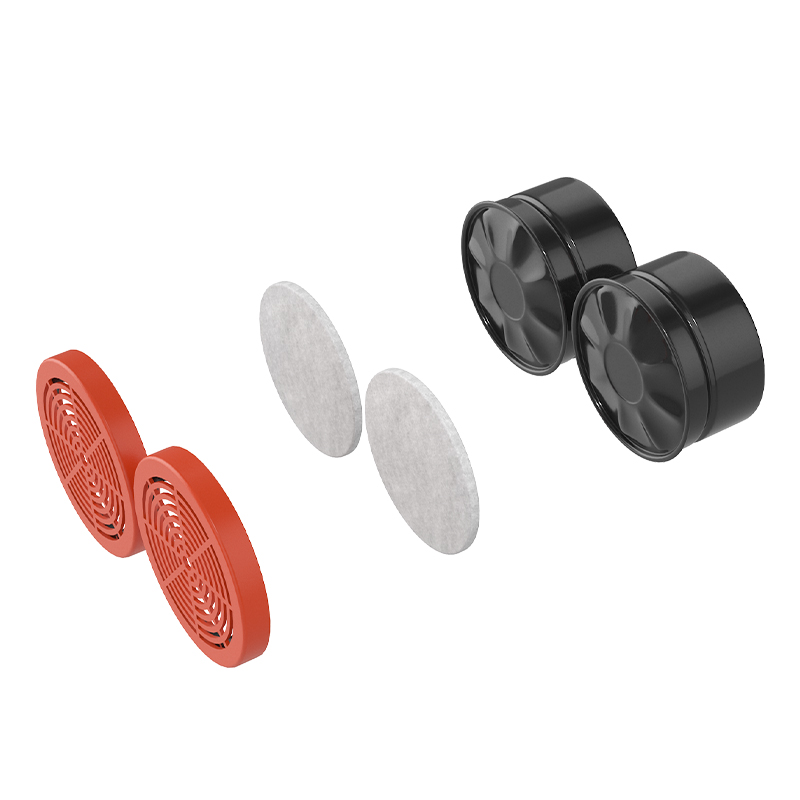
    Les composants principaux des cartouches de masques à gaz varient considérablement selon la protection ciblée (séries A/B/E/K). En résumé, « des composants spécifiques sont utilisés pour répondre aux propriétés chimiques de gaz spécifiques », une précision essentielle lorsque ces cartouches sont associées à Respirateurs à purification d'air motorisés, qui ne peut compenser l'inadéquation ou l'inefficacité des matériaux filtrants. Voici une explication correspondant à la classification des types de gaz mentionnée précédemment, en mettant l'accent sur leur pertinence pour PAPR:​1. Pour la série A (gaz/vapeurs organiques, par exemple, benzène, essence) : charbon actif comme noyau​Composant principal : Charbon actif à surface spécifique élevée (principalement du charbon de coque de noix de coco ou du charbon de bois, avec une porosité supérieure à 90 %. La surface d'un gramme de charbon actif est équivalente à celle d'un terrain de football).Principe de fonctionnement : Utilise l'« adsorption physique » du charbon actif : les molécules de gaz organiques sont adsorbées dans les micropores du charbon actif grâce aux forces de Van der Waals et ne peuvent pas pénétrer dans la zone respiratoire avec le flux d'air. Ce système est donc idéal pour une utilisation dans respirateurs à épuration d'air propulsé papr déployé dans les tâches de peinture ou de manipulation de solvants, où l'exposition continue aux vapeurs organiques nécessite une adsorption fiable et durable.Optimisation améliorée : pour les gaz organiques à bas point d'ébullition de la série A3 (par exemple, le méthane et le propane, qui sont extrêmement volatils), du « charbon actif imprégné » (ajouté de petites quantités de substances telles que le silicone) est utilisé pour améliorer la capacité d'adsorption des gaz organiques à petites molécules, ce qui est essentiel pour respirateur à épuration d'air à pression positive utilisé dans les raffineries de pétrole ou les usines de traitement du gaz naturel. 2. Pour la série B (gaz/vapeurs inorganiques, par exemple, chlore, dioxyde de soufre) : adsorbants chimiques comme composant principal​Composant principal : Charbon actif imprégné + oxydes métalliques (par exemple, sulfate de cuivre, permanganate de potassium, hydroxyde de calcium).Principe de fonctionnement : La plupart des gaz inorganiques sont hautement oxydants ou irritants et doivent être transformés en substances inoffensives par des réactions chimiques. Par exemple :Le chlore (Cl₂) réagit avec l'hydroxyde de calcium pour former du chlorure de calcium (un solide inoffensif) ;Le dioxyde de soufre (SO₂) est oxydé en sulfate (fixé dans le matériau filtrant après dissolution dans l'eau) en réagissant avec le permanganate de potassium.Cette stabilité chimique est indispensable pour les respirateurs à épuration d’air motorisés utilisés dans les usines de fabrication de produits chimiques, où les pics soudains de concentrations de gaz inorganiques exigent une neutralisation rapide et efficace.​3. Pour la série E (gaz/vapeurs acides, par exemple, acide chlorhydrique, fluorure d'hydrogène) : neutralisants alcalins​Composant principal : hydroxyde de potassium (KOH), hydroxyde de sodium (NaOH) ou carbonate de sodium (supporté sur charbon actif ou supports inertes).Principe de fonctionnement : Utilise la réaction de neutralisation acido-basique pour convertir les gaz acides en sels (inoffensifs et non volatils). Par exemple :L'acide chlorhydrique (HCl) réagit avec l'hydroxyde de potassium pour former du chlorure de potassium (KCl) et de l'eau ;Le fluorure d'hydrogène (HF) réagit avec l'hydroxyde de sodium pour former du fluorure de sodium (NaF, un solide), l'empêchant de corroder les voies respiratoires.Cette formulation résistante à la corrosion est essentielle pour les respirateurs à épuration d'air motorisés utilisés dans les ateliers de décapage (酸洗) ou dans la fabrication de semi-conducteurs, où les vapeurs acides présentent des risques pour la santé et l'équipement.​4. Pour la série K (gaz/vapeurs d'ammoniac et d'amine, par exemple, ammoniac, méthylamine) : adsorbants acides​Composant principal : Charbon actif imprégné d'acide phosphorique (H₃PO₄) ou sulfate de calcium.Principe de fonctionnement : L'ammoniac et les amines sont des gaz alcalins fixés par « neutralisation acido-basique ». Par exemple :L'ammoniac (NH₃) réagit avec l'acide phosphorique pour former du phosphate d'ammonium ((NH₄)₃PO₄, un solide) ;La méthylamine (CH₃NH₂) réagit avec le sulfate de calcium pour former des sels stables qui ne se volatilisent plus.Cette neutralisation ciblée est essentielle pour les respirateurs à épuration d’air motorisés utilisés dans les usines d’engrais ou les installations de stockage frigorifique, où les fuites d’ammoniac constituent un danger courant.​III. « Logique de correspondance » entre la structure et les composants : pourquoi les cartouches de masques à gaz ne peuvent-elles pas être mélangées ?​Il ressort du contenu ci-dessus que la « structure en couches » et la « sélection des composants » des cartouches de masques à gaz sont entièrement conçues autour de la « cible de protection » — un principe qui est encore plus critique lorsqu'il est associé à des respirateurs à épuration d'air motorisés, car ces appareils amplifient à la fois l'efficacité des cartouches correctes et les risques de cartouches incorrectes :​Si une cartouche de masque à gaz de série A (charbon actif) est utilisée pour protéger contre les gaz acides de série E avec des respirateurs à épuration d'air motorisés, les gaz acides pénétreront directement le charbon actif (aucune réaction de neutralisation ne se produit) et le flux d'air continu du PAPR délivrera ces gaz non filtrés directement à l'utilisateur ;Si une cartouche de masque à gaz de série K (adsorbant acide) est exposée au chlore de série B (hautement oxydant) dans des respirateurs à épuration d'air motorisés, des réactions indésirables peuvent survenir et même des substances toxiques peuvent être produites, substances que le PAPR fera ensuite circuler dans la zone de respiration.Cela fait également écho à la « règle d'or de sélection » mentionnée précédemment : les cartouches de masques à gaz de la série correspondante doivent être sélectionnées en fonction du type de gaz présent dans l'environnement de travail pour garantir que la structure et les composants jouent véritablement leur rôle, en particulier lorsqu'ils sont intégrés à des respirateurs à épuration d'air motorisés.​Conclusion​Une cartouche de masque à gaz n'est pas un « conteneur mono-matériau », mais une combinaison sophistiquée de « structure en couches et de composants ciblés », conçue pour fonctionner en harmonie avec les appareils de protection respiratoire à ventilation assistée. L'enveloppe extérieure assure l'étanchéité du flux d'air du PAPR, la couche de prétraitement filtre les impuretés pour maintenir l'efficacité du PAPR, et la couche centrale d'adsorption/neutralisation cible précisément des gaz spécifiques pour préserver la pureté de l'air fourni par le PAPR. En fin de compte, elle assure la protection en empêchant l'entrée de gaz nocifs et en permettant à l'air pur de sortir. Comprendre ces détails nous permet non seulement de sélectionner les cartouches de masques à gaz de manière plus scientifique pour les masques standard, mais est encore plus crucial pour les utilisateurs d'appareils de protection respiratoire à adduction d'air (APRA), qui comptent sur la synergie cartouche-APRA pour une protection fiable et constante. Cela nous permet également de mieux évaluer le moment opportun pour remplacer les cartouches en cours d'utilisation (par exemple, l'effet protecteur diminue fortement après saturation de la couche d'adsorption centrale), ce qui renforce la sécurité respiratoire, notamment pour ceux qui utilisent des APRA dans des environnements à haut risque. Pour en savoir plus, cliquez ici. www.newairsafety.com.
    EN SAVOIR PLUS

laisser un message

laisser un message
Si vous êtes intéressé par nos produits et souhaitez en savoir plus, veuillez laisser un message ici, nous vous répondrons dès que possible.
SOUMETTRE
CONTACTEZ-NOUS: sales@txhyfh.com

MAISON

PRODUITS

WhatsApp

Contactez-nous